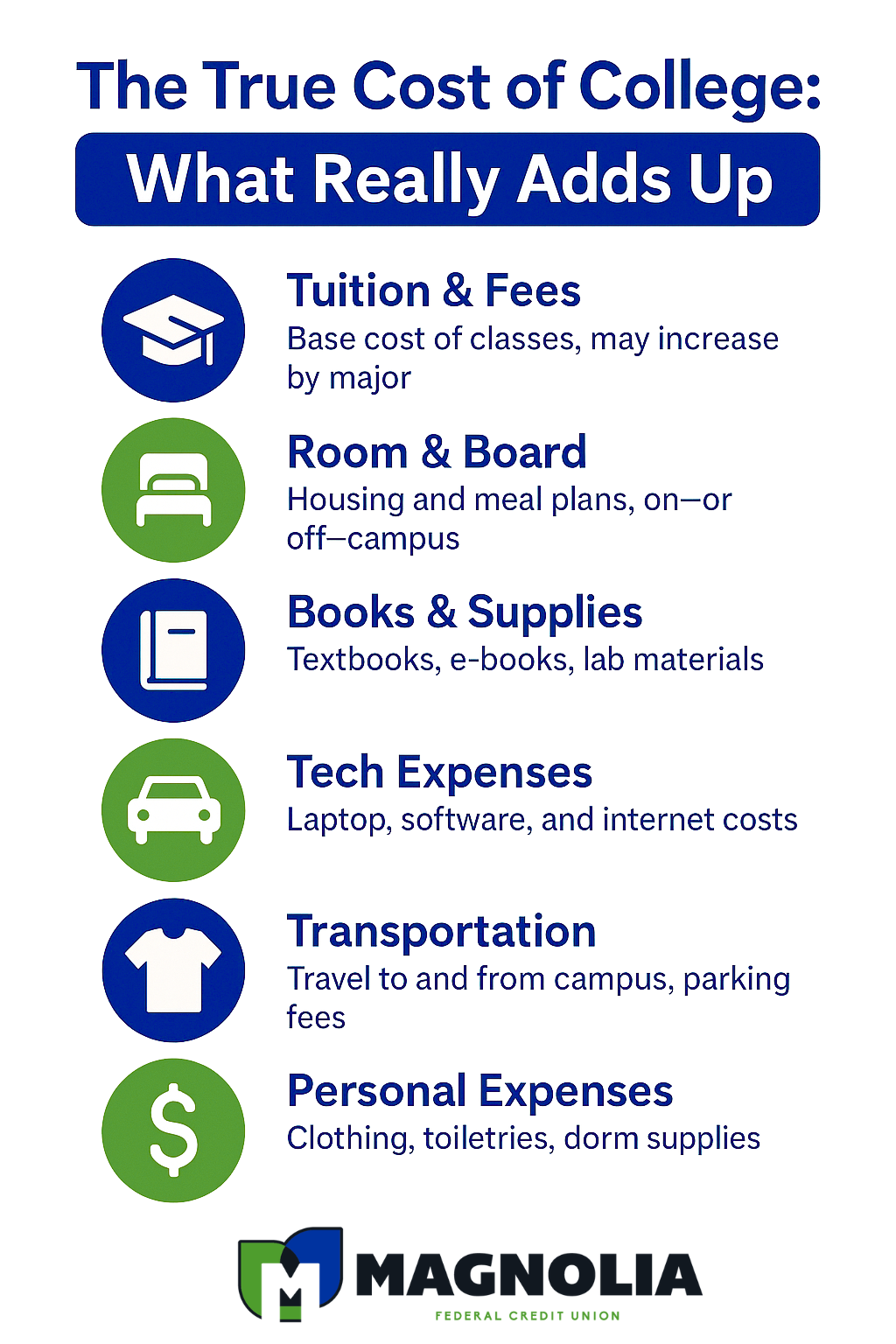
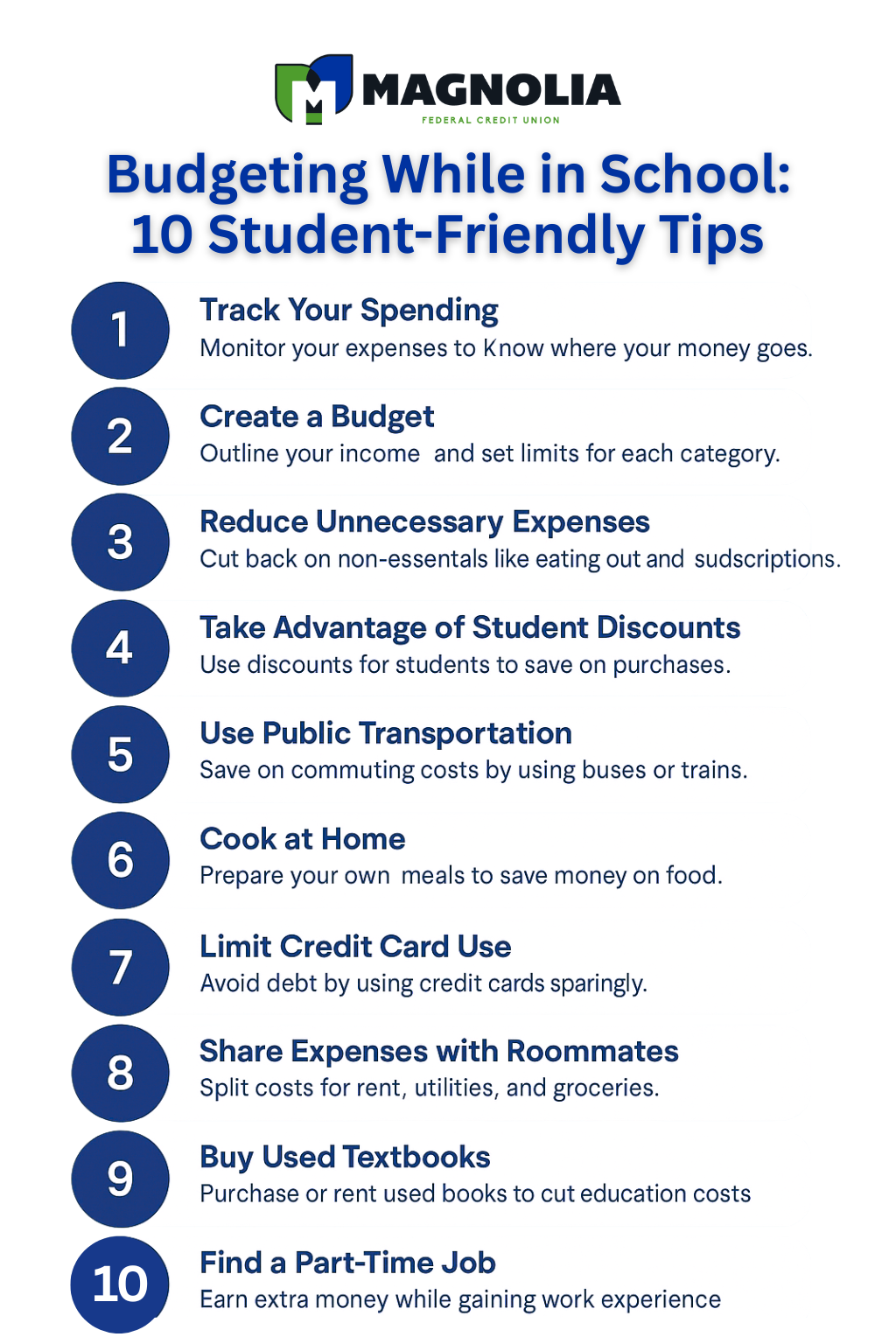
College life comes with freedom, opportunity, and let’s be honest, a lot of new expenses. Between textbooks, food, housing, transportation, and social life, it’s easy for money to disappear faster than you expect. Building a budget as a student helps you stay in control and avoid unnecessary debt, while developing financial habits that carry you into adulthood.
Magnolia Federal Credit Union is here to make budgeting simple, realistic, and something you can actually stick to.
1. Know Your Real Income
Student income looks different for everyone. Yours may come from:
• Part-time work
• Work-study
• Refund checks
• Scholarships or grants
• Financial help from family
• Savings
Add everything together to know your true monthly spendable amount—not the total of your student loans.
2. Separate Your Needs vs Wants
College is fun, but staying within a budget requires balance.
Needs include:
• Housing
• Food
• Transportation
• Phone bill
• Required textbooks
• Personal essentials
Wants include:
• Eating out
• Streaming services
• Trips or events
• New clothes
• Coffee or convenience snacks
Seeing the difference helps you redirect spending when money gets tight.
3. List Your Fixed & Variable Expenses
Fixed = predictable
Variable = flexible
Fixed expenses:
• Rent
• Meal plans
• Monthly bus pass
• Insurance
• Subscriptions
Variable expenses:
• Groceries
• Gas
• Entertainment
• Personal items
Start tracking these weekly—you’ll be surprised how quickly small purchases add up.
4. Use the 50/30/20 Rule (Student Edition)
A realistic breakdown for student life might be:
• 50% Needs
• 30% Personal/Discretionary
• 20% Savings/Debt Prep
Savings can include:
• Emergency fund
• Future moving expenses
• Next semester’s books
Even $10–$20 per week makes a difference.
5. Use Student-Friendly Tools
Good budgeting apps include:
• Mint
• EveryDollar
• PocketGuard
• Notion templates
• Simple Excel/Google Sheets
Magnolia FCU also offers budget worksheets and counseling for students who need help getting started.
6. Expect the Unexpected
College comes with surprise expenses:
• Lab fees
• Parking tickets
• Class materials
• Repairs or medical costs
Build a cushion if you can—even $100–$250 helps avoid panic.
7. Review Your Budget Monthly
Your income or class load may change each semester.
Adjust your budget as needed so it fits your real life, not an ideal version of it.
Bottom Line
Budgeting as a student doesn’t have to be complicated. With a little planning and consistency, you can enjoy college life while building smart financial habits. Magnolia FCU is here to support you every step of the way.
Infographics
Related Articles
Life After Graduation: Launching Your Financial Path
Understanding Student Loans and Their Long-Term Impact
Your Financial Roadmap: Building a Strong Foundation for Your Future
How to Build a Budget As a Student
Want more financial tips?
More Financial Resources